LMS
LMS
Last updated on 19th May 2026| 13154

- Exploring Career Paths in Artificial Intelligence
- AI Data Annotator and Data Curator
- Prompt Engineer
- AI Machine Learning Engineer
- AI Product Manager
- AI Ethics and Compliance Specialist
- Natural Language Processing Specialist
- Computer Vision Engineer
- Conclusion
Exploring Career Paths in Artificial Intelligence
Stepping into the professional world with a Career Paths in Artificial Intelligence degree is daunting enough, but entering the artificial intelligence space can feel like walking into a maze with a hundred different doors. The media makes it seem like the only way to work in Artificial Intelligence Training is to be a math genius building complex neural networks from scratch. That narrative completely ignores the reality of how the enterprise AI industry actually operates. Building, deploying, and maintaining artificial intelligence requires a massive ecosystem of different roles, many of which do not require a PhD in advanced mathematics. Companies desperately need freshers who understand data, know how to talk to AI models, and can manage the business side of technology. The secret to successfully launching your career is realizing that AI is not just one single job title it is an entire industry with a place for coders, communicators, and creative thinkers alike. Taking the time to map out these distinct paths allows you to align your strengths with the right role instead of forcing yourself into a mold that makes you miserable.
AI Data Annotator and Data Curator
The absolute foundation of the entire artificial intelligence industry is data, and someone has to organize it. AI models are completely useless without massive datasets that have been accurately labeled and cleaned. As an AI data annotator or curator, your primary job is to tag images, categorize text, and clean messy datasets so the machine learning models have high-quality information to learn from. This is one of the most accessible entry-level roles for freshers because it focuses more on attention to detail and domain knowledge than hardcore programming in Artificial Intelligence Training. While some see this as a junior task, it is actually a superpower. The person who labels the data understands the AI’s blind spots better than anyone else. Spending a year in data curation teaches you exactly how neural networks interpret information, which makes transitioning into a higher-paying machine learning engineering role much easier later on because you already intuitively understand the fuel that powers the system. Staying consistent with data curation ensures stronger preparation, and focusing on accuracy builds credibility. Over time, this mastery positions you as a fresher who can confidently grow into advanced AI roles.
Ready to Get Certified in Artificial Intelligence ? Explore the Program Now Artificial Intelligence Online Training Offered By ACTE Right Now!
Prompt Engineer
- Designing AI Interactions: Prompt engineers are the bridge between human intent and AI output. You are responsible for writing the exact instructions, context, and constraints that guide large language models to generate useful, accurate, and safe responses for enterprise applications.
- Iterative Testing and Refinement: You rarely get the perfect output on the first try. This role requires you to constantly test different phrasing, adjust parameters, and refine your prompts until the AI consistently delivers the desired result without hallucinating or breaking character.
- Building System Templates: Instead of writing one-off prompts, you design reusable prompt templates that developers can integrate into software applications Step-by-Step Guide to Becoming an AI Engineer This requires understanding how variables work within text to create dynamic AI workflows.
- Safety and Guardrail Implementation: A massive part of the job is preventing the AI from doing bad things. You design negative prompts and strict rules that stop the model from generating offensive content, leaking sensitive data, or answering questions outside its designated scope.
- Cross-Functional Collaboration: Prompt engineers work closely with software developers to integrate the prompts into the backend and with business stakeholders to understand what the end-user actually needs the AI to say. It is a highly communicative, non-isolated role.

Develop Your Skills with Artificial Intelligence Training
Weekday / Weekend BatchesSee Batch DetailsAI Machine Learning Engineer
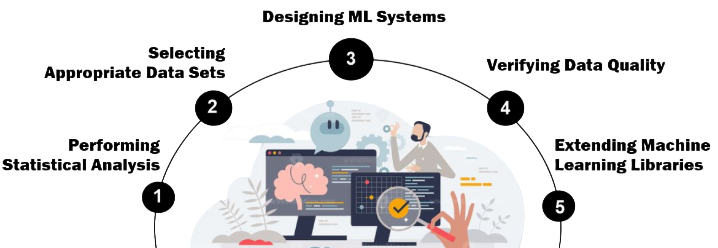
Machine learning engineering is the most traditional and technically demanding path in the AI industry, but it is evolving rapidly. As an ML engineer, your job is to take a data science model and figure out how to deploy it into a live production environment where thousands of users can access it. Freshers entering this role need a solid foundation in Python, a good understanding of how algorithms like random forests or neural networks function, and familiarity with cloud platforms like AWS or Azure. You are not necessarily inventing new math instead and Certification in AI, you are using libraries like Scikit-Learn or TensorFlow to build pipelines that feed data to a model and spit out predictions. The real challenge is learning MLOps, which is the practice of monitoring these models once they are live to ensure they do not slow down the application or start making inaccurate predictions over time.
It is a rigorous, highly paid path perfect for freshers who genuinely love coding and system architecture. Staying consistent with ML practice ensures stronger preparation, and focusing on deployment builds credibility. Over time, this mastery positions you as a fresher who can confidently manage enterprise AI systems.
To ExploreArtificial Intelligence in Depth, Check Out Our Comprehensive Artificial Intelligence Online Training To Gain Insights From Our Experts!
AI Product Manager
Artificial intelligence products are fundamentally different from traditional software, and managing them requires a very specific mindset. An AI product manager does not write the code or build the models. Instead, they decide what the AI should actually do and how it fits into the market. If a company wants to build an AI tool to help doctors read X-rays, the product manager figures out the user interface, defines what a successful outcome looks like, and ensures the tool complies with medical privacy laws. This is an incredible path for freshers who have a technical background but realize they prefer strategy, leadership, and talking to customers over staring at a code editor all day. You need to understand AI capabilities well enough to know what is technically feasible, but your primary weapons are empathy,How To Build a Career In AI and Mechine learning, business acumen, and project management skills. Because AI is so new, there is a massive shortage of young product managers who actually understand how machine learning works, making this a highly lucrative niche. Staying proactive with product strategy ensures stronger opportunities, and focusing on leadership builds credibility. Over time, this mastery positions you as a fresher who can confidently guide AI product innovation.
Looking to Master Machine Learning? Discover the Artificial Intelligence Expert Masters Program Training Course Available at ACTE Now!
AI Ethics and Compliance Specialist
As companies rush to put AI into everything from hiring to loan approvals, they are creating massive legal and ethical risks. AI models are notorious for picking up human biases, meaning they might silently discriminate against certain demographics. An AI ethics and compliance specialist is responsible for auditing these models, testing them for bias, and ensuring the company is following emerging government regulations regarding artificial intelligence. This is one of the newest and most important career paths in the industry. You do not need to be a software engineer to do this, but you do need a strong understanding of how data flows through a system and a deep knowledge of legal frameworks and AI Applications. Freshers with backgrounds in law, sociology, or public policy paired with a basic understanding of tech are finding incredible opportunities here. As governments start handing out massive fines for irresponsible AI deployment, companies are desperately hiring compliance specialists to protect them from lawsuits and public relations disasters.
Natural Language Processing Specialist
Natural language processing, or NLP, is the branch of AI that deals with text and speech. It is the technology powering chatbots, translation apps, and sentiment analysis tools. As an NLP specialist, your focus is narrowed specifically to how machines understand and generate human language. For freshers, this is a fascinating path because it sits right at the intersection of linguistics and computer science. You do not just treat text as random characters you learn about tokenization, word embeddings, and the architecture of large language models like Transformers. Your daily work involves fine-tuning pre-trained models on specific company data, Advantages and Disadvantages Of AI building systems that can summarize long documents, or creating chatbots that can actually hold a coherent conversation.
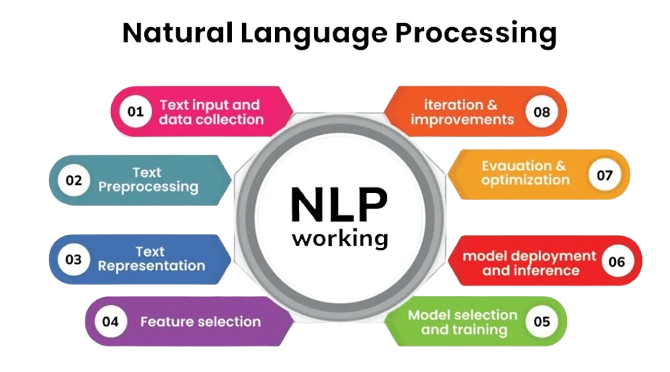
Because almost every enterprise company wants to integrate text-based AI into their customer service or internal tools, NLP specialists are in incredibly high demand. It requires less math than deep computer vision roles but demands a high level of creativity in how you structure language data. Staying proactive with NLP practice ensures stronger opportunities, and focusing on creativity builds credibility. Over time, this mastery positions you as a fresher who can confidently deliver enterprise-ready language solutions.
Preparing for Artificial Intelligence Job Interviews? Have a Look at Our Blog on Artificial Intelligence Interview Questions and Answers To Ace Your Interview!
Computer Vision Engineer
Computer vision is the branch of AI that teaches machines to see and interpret visual data from the real world. This is the technology behind self-driving cars, facial recognition systems, and factory robots that can spot defects on an assembly line. As a computer vision engineer, you work with images, videos, and 3D sensor data instead of text. Freshers entering this field need to get comfortable with specialized libraries like OpenCV and deep learning frameworks that process pixel data. The work is highly mathematical and visually rewarding because you can literally see the Artificial Intelligence Training working when it successfully draws a bounding box around a pedestrian in a video feed. This path is heavily driven by industries like automotive, manufacturing, and healthcare. While it requires a slightly steeper learning curve to understand how convolutional neural networks function, it leads to some of the most futuristic and highly paying jobs in the entire engineering sector. If you love the idea of bridging the digital and physical worlds, computer vision is the perfect fit. Staying consistent with vision practice ensures stronger preparation, and focusing on applied mathematics builds credibility. Over time, this mastery positions you as a fresher who can confidently manage enterprise-level visual AI systems.
Conclusion
Exploring career paths in artificial intelligence reveals that this industry has room for all types of talent, not just hardcore mathematicians. Whether your strength lies in meticulous data organization, creative prompt writing, strategic product thinking, or rigorous software engineering, there is a specific niche waiting for you. The biggest mistake freshers make is assuming they must fit into the traditional machine learning engineer box, even if they hate math. By understanding the distinct responsibilities of roles like NLP specialist, ethics officer, or product manager, you can align your career with your natural interests. The Artificial Intelligence Training boom is still in its early phases, meaning the rules are not set in stone. Companies are actively creating new roles as the technology evolves. Take the time to sample different aspects of the AI pipeline, figure out which part of the process you genuinely enjoy, and aggressively pursue that specific path. A fulfilling, high-paying career in artificial intelligence is entirely within your reach if you choose the door that actually matches your skills. Staying curious with exploration ensures stronger opportunities, and focusing on alignment builds credibility. Over time, this strategy positions you as a fresher who can thrive in AI-driven industries.